(A City of London Steeplechase, part 2)
This is my second ‘City of London Steeplechase’, a series of virtual guided walks that take in all 100 or so of the City of London’s churches, past and present, one Ward at a time. Having begun with the Tower Ward, moving clockwise to the west along the Thames our next stop is Billingsgate Ward.
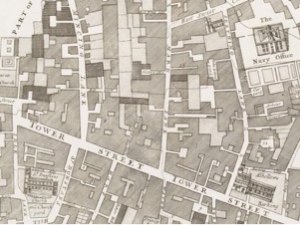
Billingsgate is a small, broadly rectangular plot of land situated between London Bridge and the Tower of London. It comprises four ancient lanes (Pudding Lane, Botolph Lane, Lovat Lane and St. Mary-at-Hill) that run northwards in parallel up a up a steep slope from the Thames as far as Eastcheap. The lanes are bisected by a number of smaller lanes and alleys running east-west, forming a rough grid pattern as shown in the maps below, from Strype’s edition of Stow’s Survey of London in 1720 and John Rocque’s map of 1746. The ward originally had five parish churches, all of which were destroyed or at least seriously damaged in the Great Fire. Three were rebuilt by Wren and two, St Margaret Pattens and St Mary-at-Hill, survive today among the City’s finest.
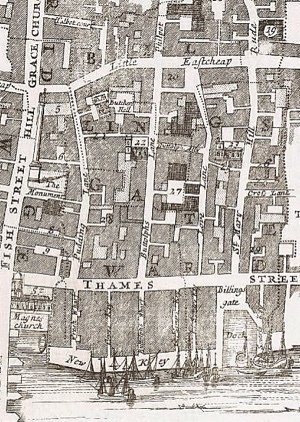
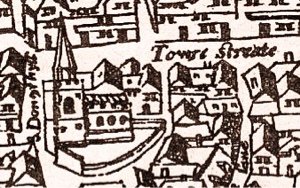
Billingsgate Ward from Strype, 1720
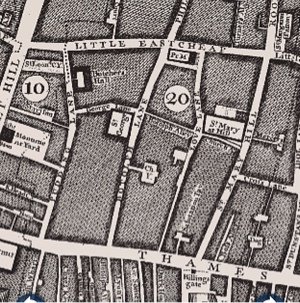
Billingsgate Ward from Rocque, 1746
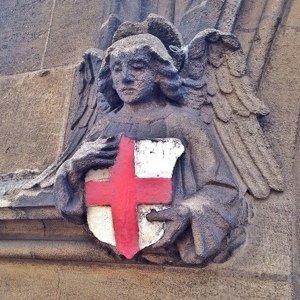
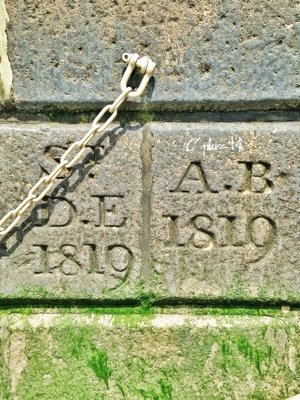
As every schoolchild knows, Pudding Lane is where the Great Fire of London was started, shortly after midnight on Sunday, 2 September 1666. The exact site of the start of the fire is down at the bottom of the lane, and we’ll visit it later on in our walk. Our first destination, however, is the site of St George, Botolph Lane, one of the 15 or so Wren churches that have disappeared from London’s skyline. There is very little sign of St George’s now - not even a blue plaque - but if you look carefully as you walk down Pudding Lane to St.George’s Lane you should see an iron parish boundary marker set low down on a wall on the left hand side.
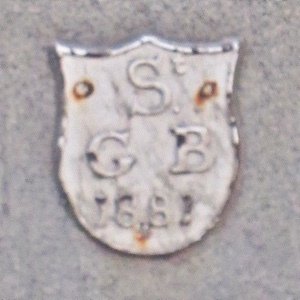
St George Botolph Lane boundary mark, Pudding Lane

Turn left into St.George’s Lane. An unprepossessing view, lined with ugly office blocks, compares poorly with what one would have seen until 1904 when St.George’s was demolished.
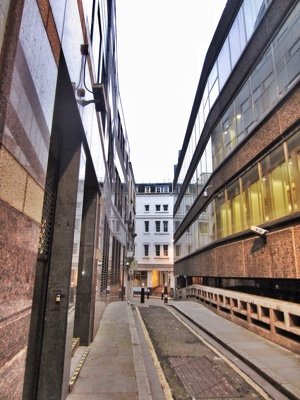
View east down St George’s Lane, 2015
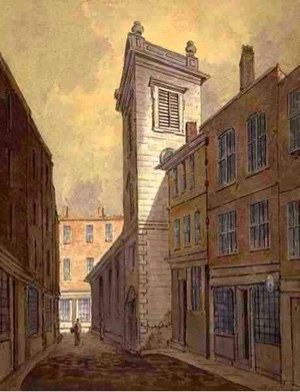
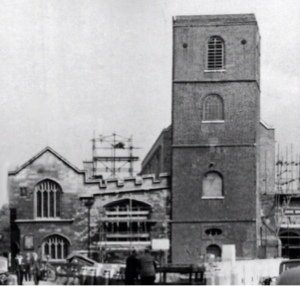
View east down St George’s Lane before 1904
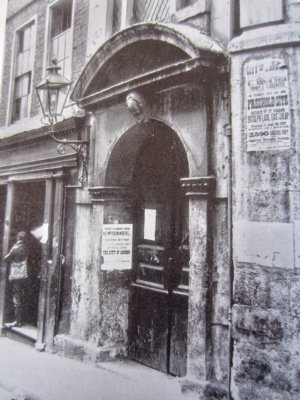
Doorway of St George Botolph Lane, St George’s Lane, shortly before demolition in 1904
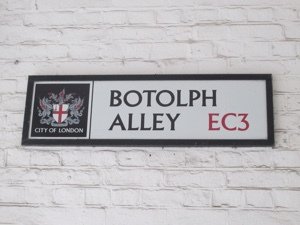
Half way down Botolph Alley look up on the left hand side for another parish boundary mark for St. George Botolph Lane. Notice how close you are to the tower of St Mary-at-Hill in front of you at the end of the alley - a great demonstration of how small the City’s medieval parishes were!
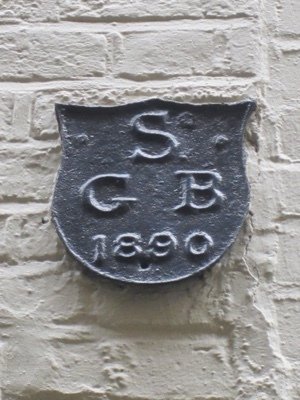
Parish boundary mark for St George Botolph Lane in Botolph Alley
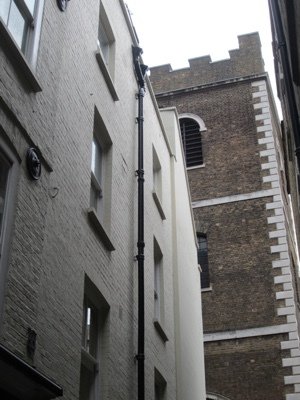
View east along Botolph Alley to St Mary-at-Hill church (note parish boundary mark bottom left)
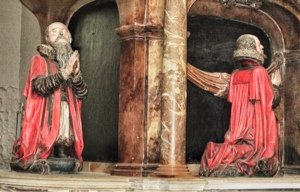
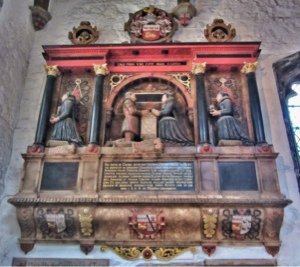
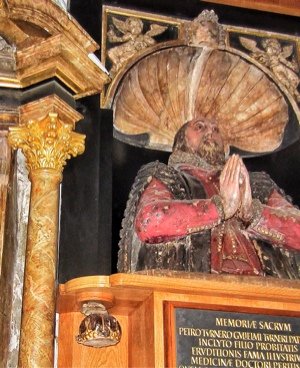
Enter through the west door from Lovat Lane and take a look round the vestibule. On your left high on the wall is a monument to one Isaac Millner - this is a relic from St George Botolph Lane, rescued when that church was demolished.
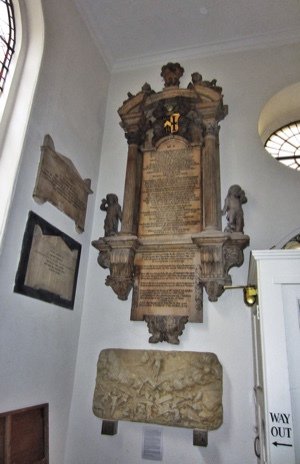
Vestibule of St Mary-at-Hill (monument from St George Botolph Lane)
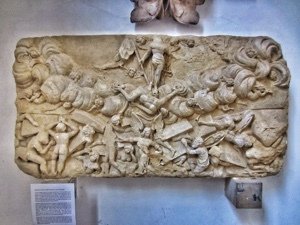
Resurrection Panel in St Mary-at-Hill vestibule
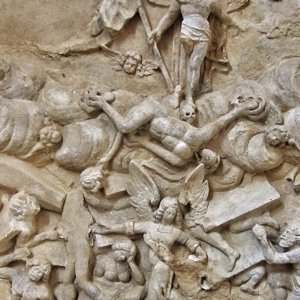
Resurrection Panel in St Mary-at-Hill (detail)
Note also in the vestibule some attractive wooden panelling, dated 1672 with the carved names of the churchwardens of the time.
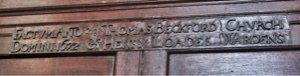
Panellling in St Mary-at-Hill vestibule (1672)
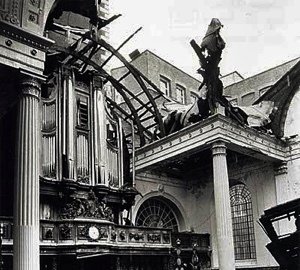
St Mary-at-Hill after the fire of 1988
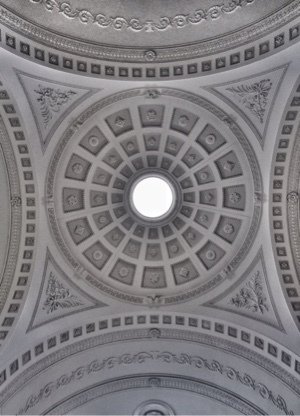
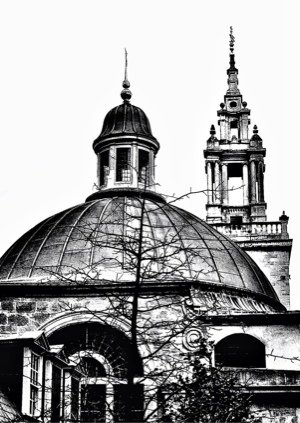
The dome of St Mary-at-Hill
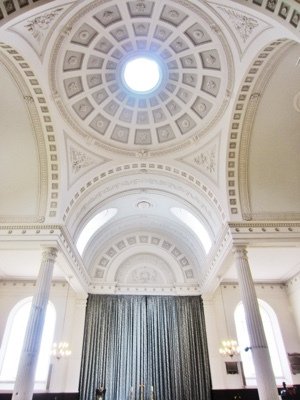
St Mary-at-Hill, east end and dome
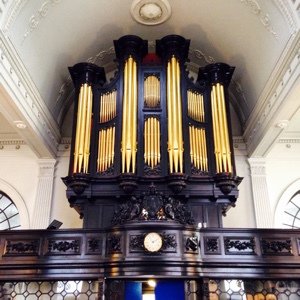
St Mary-at-Hill, organ
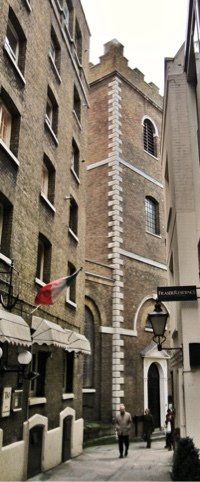
St Mary-at-Hill from Lovat Lane
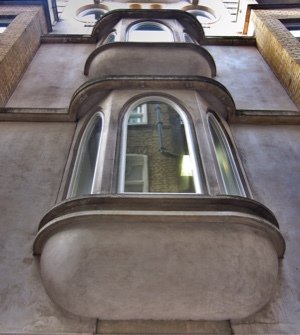
Gaudi-esque windows on Lovat Lane

Old anchor sign on Lovat Lane
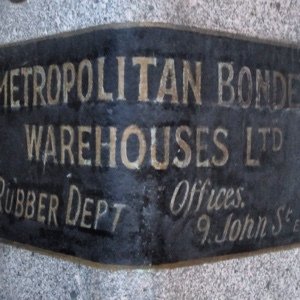
Old sign on Lovat Lane
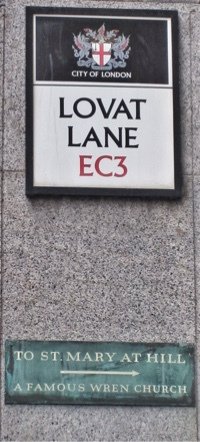
Corner of Lovat Lane and Eastcheap

16 Eastcheap, site of St Andrew Hubbard

Parish boundary mark for St Andrew Hubbard
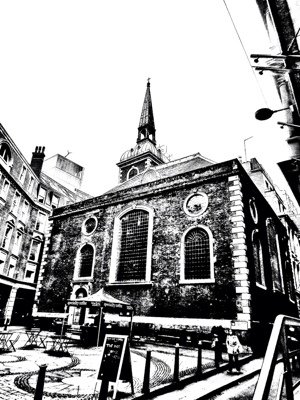
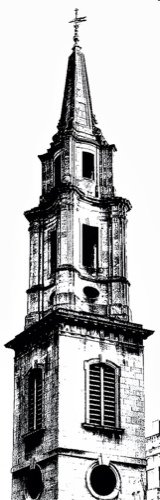
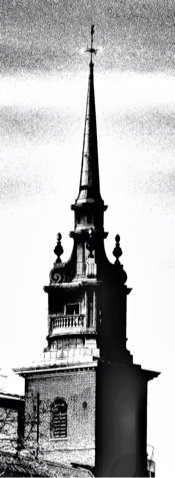
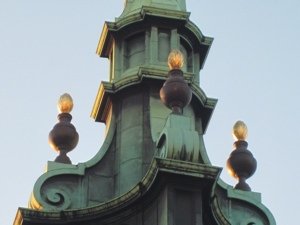
St Margaret Pattens is first recorded as early as 1067 as a small wooden building, which was replaced in stone in the early medieval period and rebuilt again in 1538. Destroyed in the Great Fire, the church was rebuilt by Wren and completed, with its lead-covered timber spire (the only such Wren structure remaining in London) in 1702.
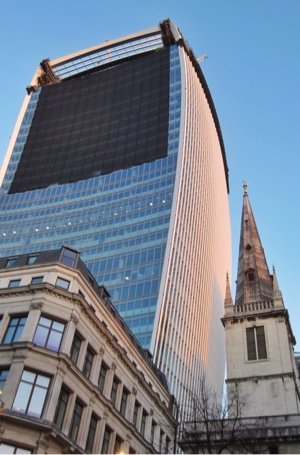
St Margaret Pattens with Walkie-Talkie
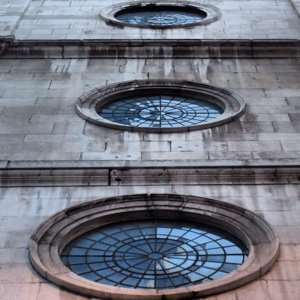
Round windows, St Margaret Pattens
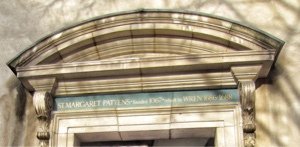
Doorcase, St Margaret Pattens

Old shop premises, Eastcheap
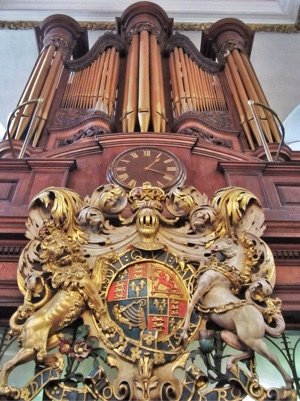
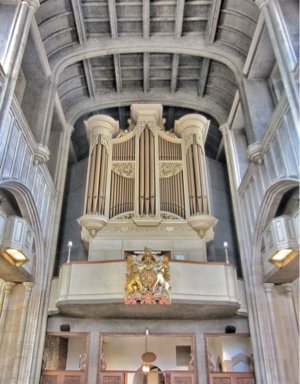
Organ and Royal Arms, St Margaret Pattens
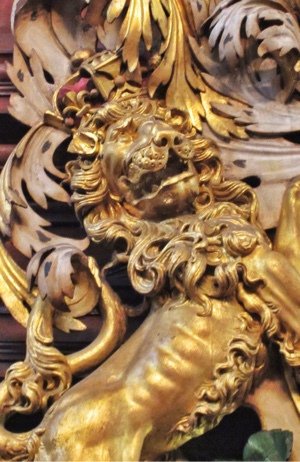
Royal Arms, St Margaret Pattens (detail of lion)
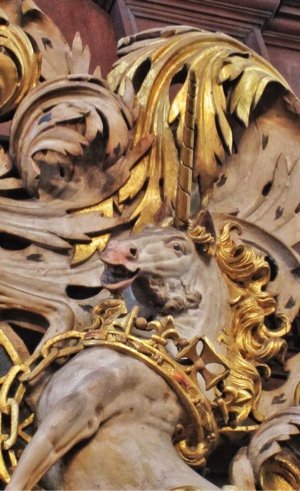
Royal Arms, St Margaret Pattens (detail of unicorn)
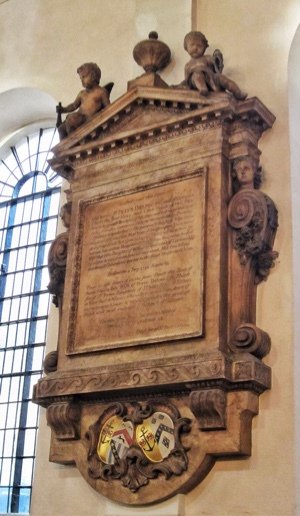
Monument, St Margaret Pattens
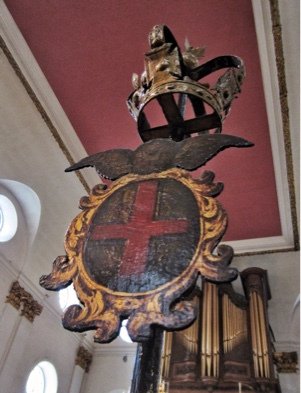
Sword Rest, St Margaret Pattens
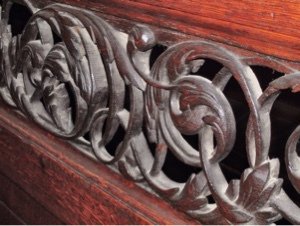
Exquisite carving, St Margaret Pattens

Stained Glass (Pattenmakers’ Company), St Margaret Pattens
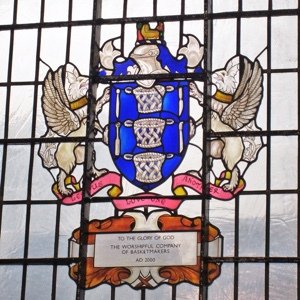
Stained Glass (Basketmakers’ Company), St Margaret Pattens
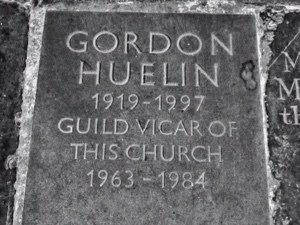
Stine tablet to Gordon Huelin, St Margaret Pattens

Gordon Huelin
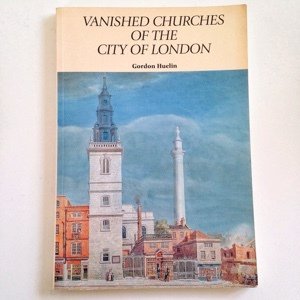
Vanished Churches of the City of London
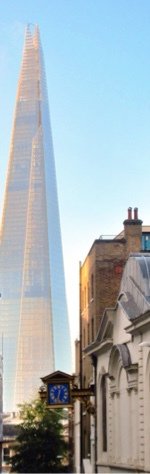
View of the Shard down St Mary-at-Hill
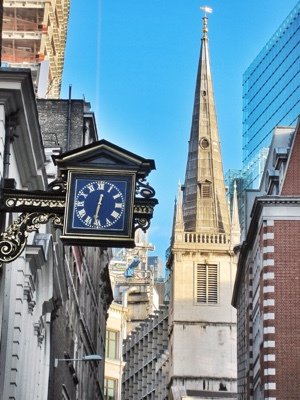
View of St Margaret Pattens past the St Mary-at-Hill clock
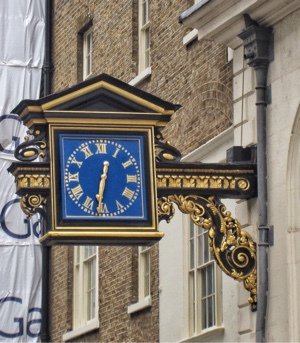
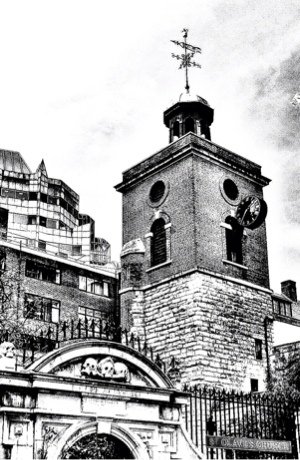
St Mary-at-Hill, clock
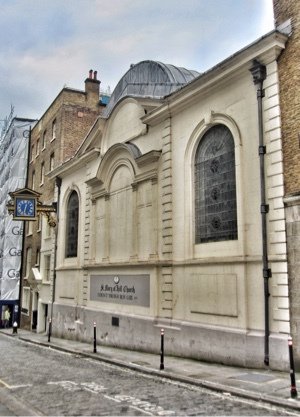
St Mary-at-Hill, east front
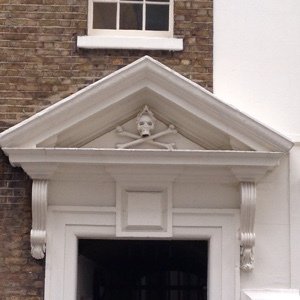
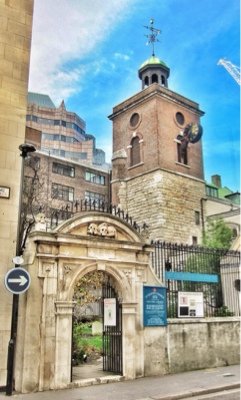
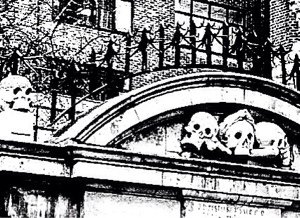
Skull & bones doorcase, St Mary-at-Hill
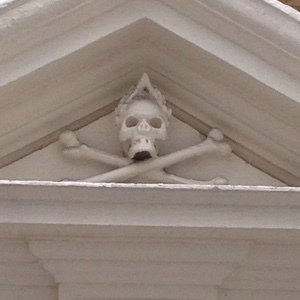
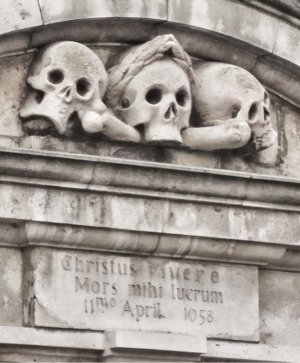
Skull & bones doorcase, St Mary-at-Hill (detail)
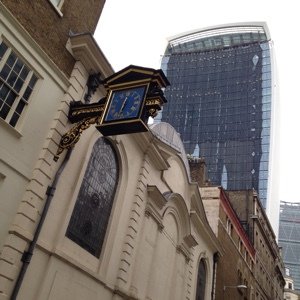
The Walkie-Talkie and St Mary-at-Hill

Churchyard of St Mary-at-Hill
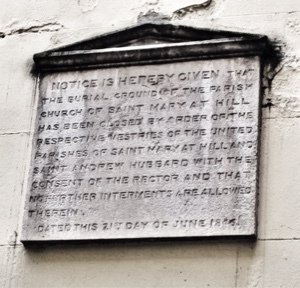
Sign on north wall of St Mary-at-Hill
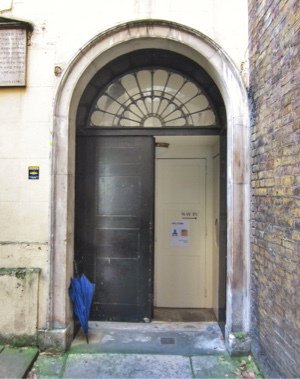
North porch of St Mary-at-Hill

Watermens’ Hall, St Mary-at-Hill
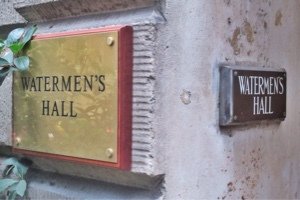
Watermens’ Hall
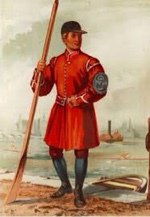
A Thames Waterman , wearing Doggett’s Coat & Badge

Old Billingsgate, with Shard behind

Billingsgate, early morning
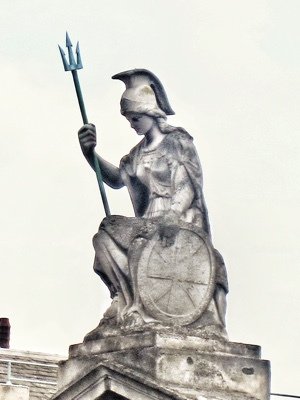
Britannia statue on roof of Old Billingsgate
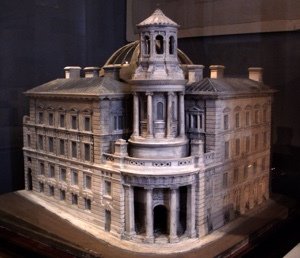
Model for former Coal Exchange
In the town of Trinovantum [London] Belinus caused to be constructed a gateway of extraordinary workmanship, which in his time the citizens called Billingsgate, from his own name. … Finally, when his last day dawned and carried him away from this life, his body was cremated and the ash enclosed in a golden urn. This urn the citizens placed with extraordinary skill on the very top of the tower in Trinovantum which I have described.
Writing in 1603, Stow described Billingsgate as a busy waterside community with the quaysides thronged with all shapes and sizes of boats unloading fish, salt, oranges, onions, corn, sea coal and ale, ‘for service of the Citie, and the parts of this Realme adjoyning’. The quay had had rights to charge ships for docking since the reign of Edward III and a permanent fish market was established in 1699.
The present buildings were designed by Horace Jones in 1875 and sensitively renovated by Richard Rogers following the fish market’s relocation to Canary Wharf in 1982. It is now an entertainment and business venue, with no trace left of the chaos and noise of lorries and barrows packed with fish that were the hallmark of this area for centuries. During this time Billingsgate became synonymous for profanity and offensive language, together with the raucous street cries of the fish sellers. Writing in 1861 Henry Mayhew described the scene:
The wooden barn-looking square where the fish is sold, is soon after six o’clock crowded with shiny cord jackets and greasy caps. Everybody comes to Billingsgate in his worst clothes, and no-one knows the length of time a coat can be worn until they have been to a fish sale…over the hum of voices is heard the shouts of the salesmen who…stand on their tables, roaring out their prices…all are bawling together…till the place is a perfect Babel of competition. “Ha-a-ansome cod! best in the market! All alive! alive! alive O!” “Ye-o-o! Ye-o-o! here’s your fine Yarmouth bloaters!” …and much more.
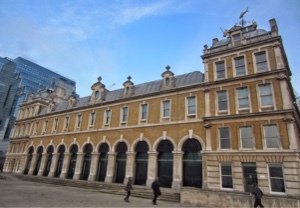
Former Billingsgate market, south view.
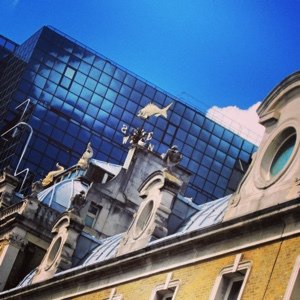
Former Billingsgate market, dolphin weathervanes
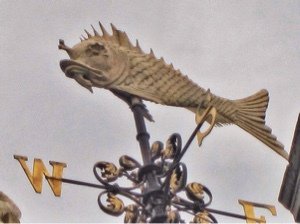
Dolphin weathervane, old Billingsgate
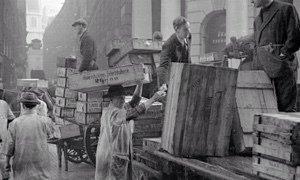
Billingsgate porters at work looking up St Mary-at-Hill

The view back up Lovat Lane from Monument Street
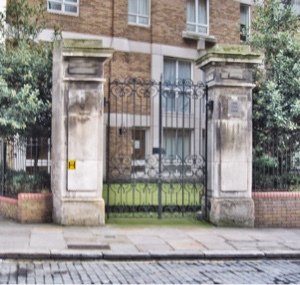
One Tree Park
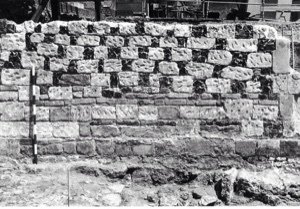
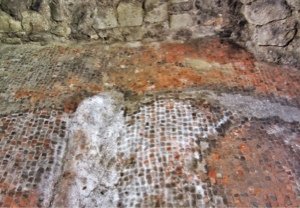
Patterned wall of St Botolph Billingsgate, uncovered during excavations at Billingsgate Lorry Park
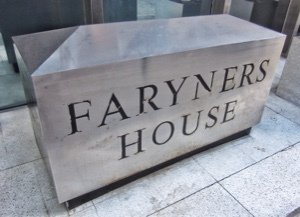
Faryners House, Monument Street
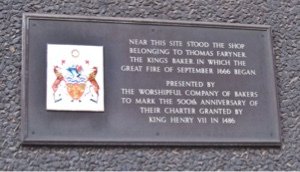
Sign on Faryners House marking the start of the Great Fire of London in 1666
At 1am on Sunday 2 September Thomas and his family were woken by smoke. The household escaped through a window to the roof of a neighbour and raised the alarm. Thomas later said that as he had left he could see that the fire had not started near his oven. He also insisted he had extinguished the fire before going to bed and that no window or door had been open so a draught could not have re-lit the fires. He did admit that some wood had been left next to the ovens so it would be dry in the morning. Amazingly he seems to have escaped blame and returned to baking after the fire. It is now accepted that a spark or ember from his oven was probably responsible.
The rest, as they say, is history.
That completes our second City of London steeplechase!
If you have enjoyed this, I have compiled a separate Storify page here with links to relevant videos, articles and blog posts by other writers that bring further life to this part of the City of London. These include several clips on Billingsgate Market, with old footage of the market porters, some pieces about Billingsgate profanity, and (by way of contrast!) a lovely choral interlude filmed in St Mary-at-Hill. Hope you like it!